The Great Homoeopathic Assembly
Step into the shoes of a stalwart. Bring historical methodologies to life, command the floor, and negotiate a landmark standardized case-taking proforma. Every registered delegate receives free pre-conference training.
Rules of Procedure & Floor Mechanics
Experience the 3 distinct phases of the Assembly debate on October 7.
Moderated Caucus
Formal floor debate where delegates take the podium defending their assigned stalwart's methodology on case taking, hierarchy, and repertorisation.
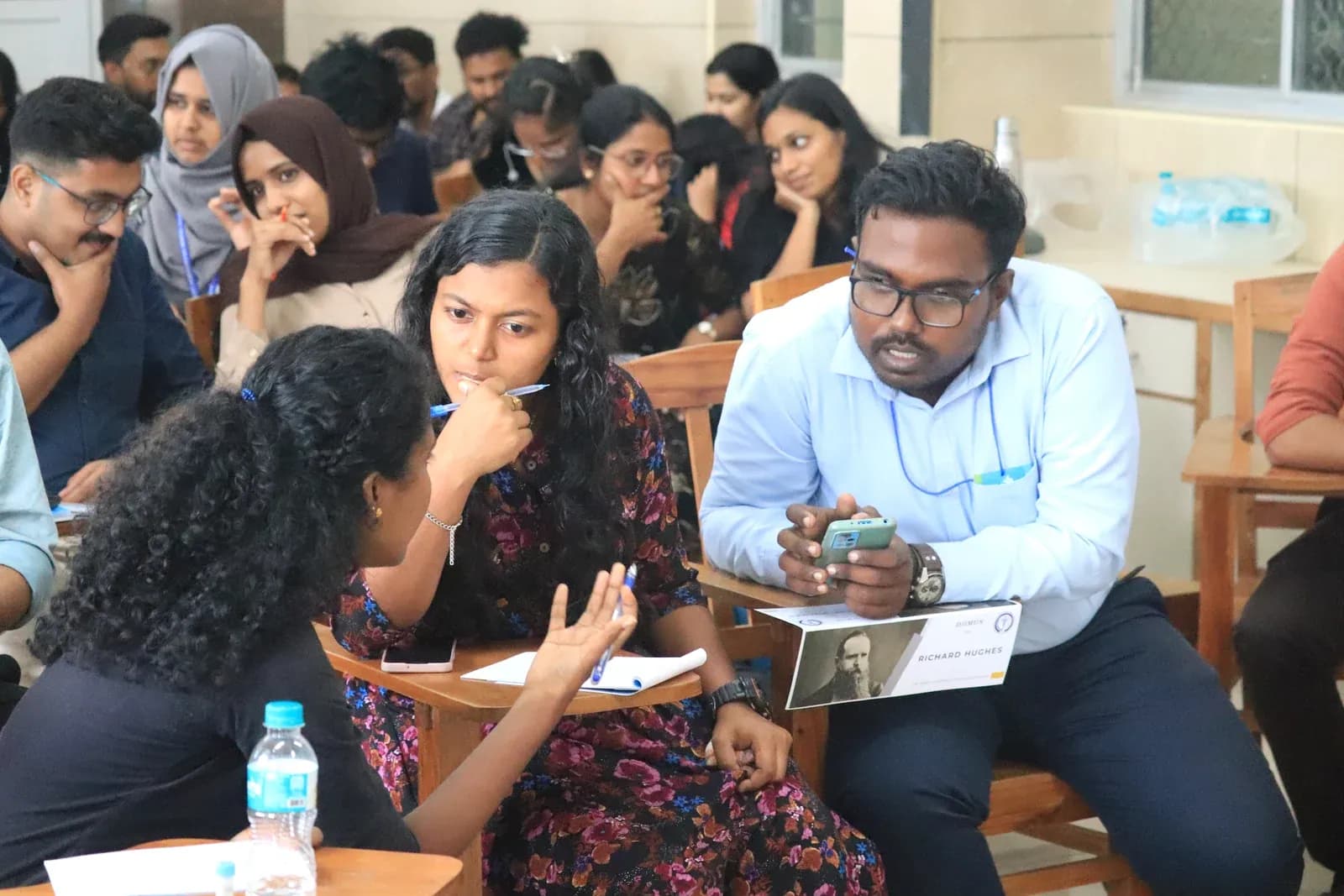
Unmoderated Caucus
Informal floor negotiations allowing different schools of thought to form alliances, debate points of synergy, and reach clinical compromise.
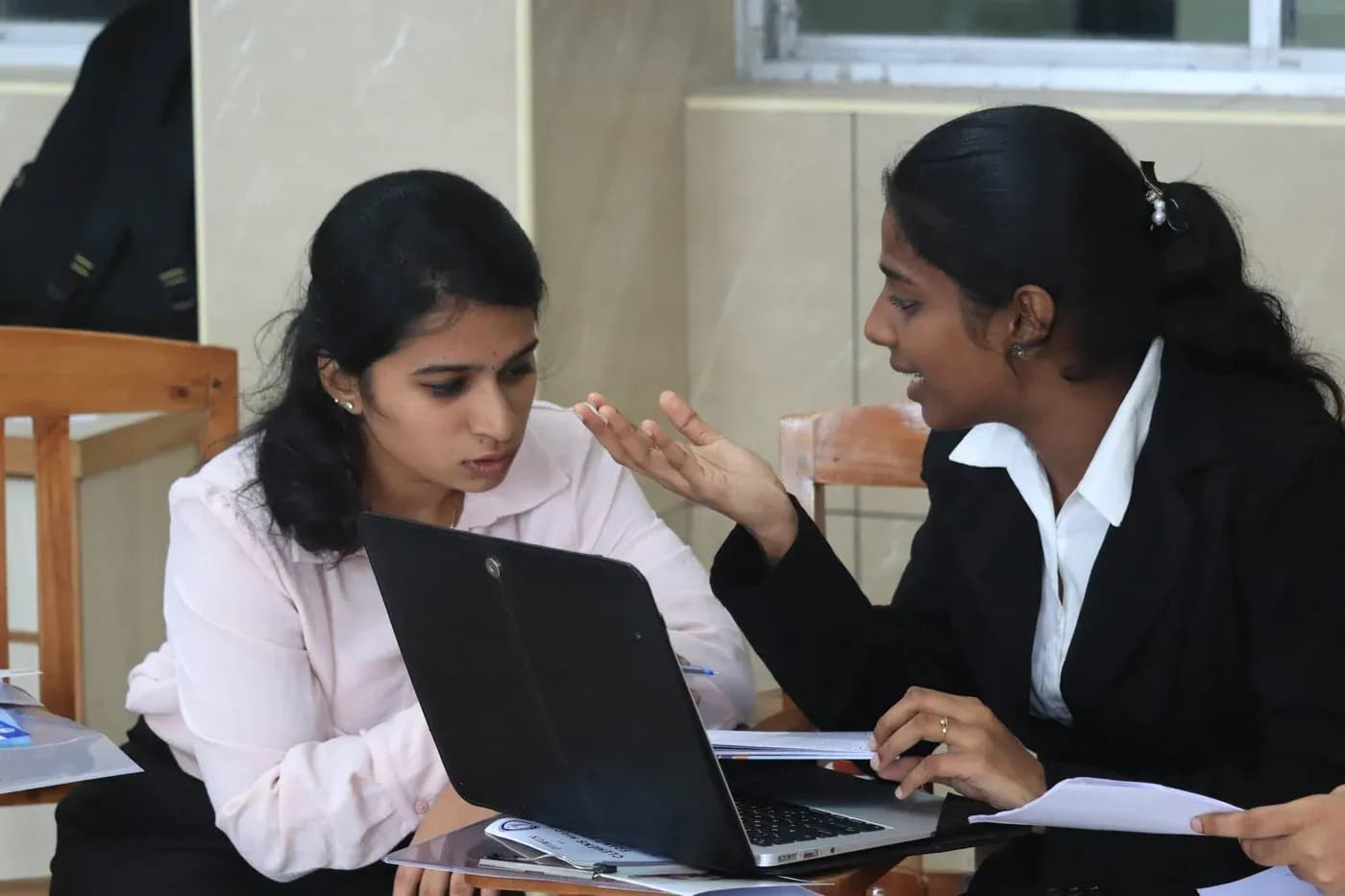
Working Papers & Resolutions
Delegates synthesize arguments into a written resolution establishing a standardized, practical approach to modern clinical case management.
Floor Points & Parliamentary Motions
Raised when a delegate experiences physical discomfort or cannot hear the speaker (audibility, microphone, or room ventilation issues).
Raised when there is an error in parliamentary procedure or decorum by the Executive Board or a fellow delegate.
Raised to ask the Executive Board a question regarding committee rules, speaking times, or voting order.
Suspends the General Speakers List (60–90 seconds) for rapid sub-topic debate, or unmoderated caucus for informal bloc negotiations.
How Character Allotment Works
You don't need prior debate experience or heavy historical research. Here is how simple the process is:
Surprise Doctor Reveal
Which historical master will your team represent? It's a surprise! We reveal all doctors simultaneously so everyone begins preparing on the exact same day.
Ready-to-Use Cheat Sheet
No need to read thick old books. We send you an easy-to-read summary pack with your doctor's core views, key methods, and practical debate pointers.
Free Practice Sessions
First time speaking at an event? Our team hosts free online workshops before the conference to guide you through speaking rules and mock practice.
Pioneers of the Assembly
Every registered team or solo pioneer is allotted to represent one of the 11 historical masters below, debating their authentic case-taking doctrines, repertorial methodologies, and literature.
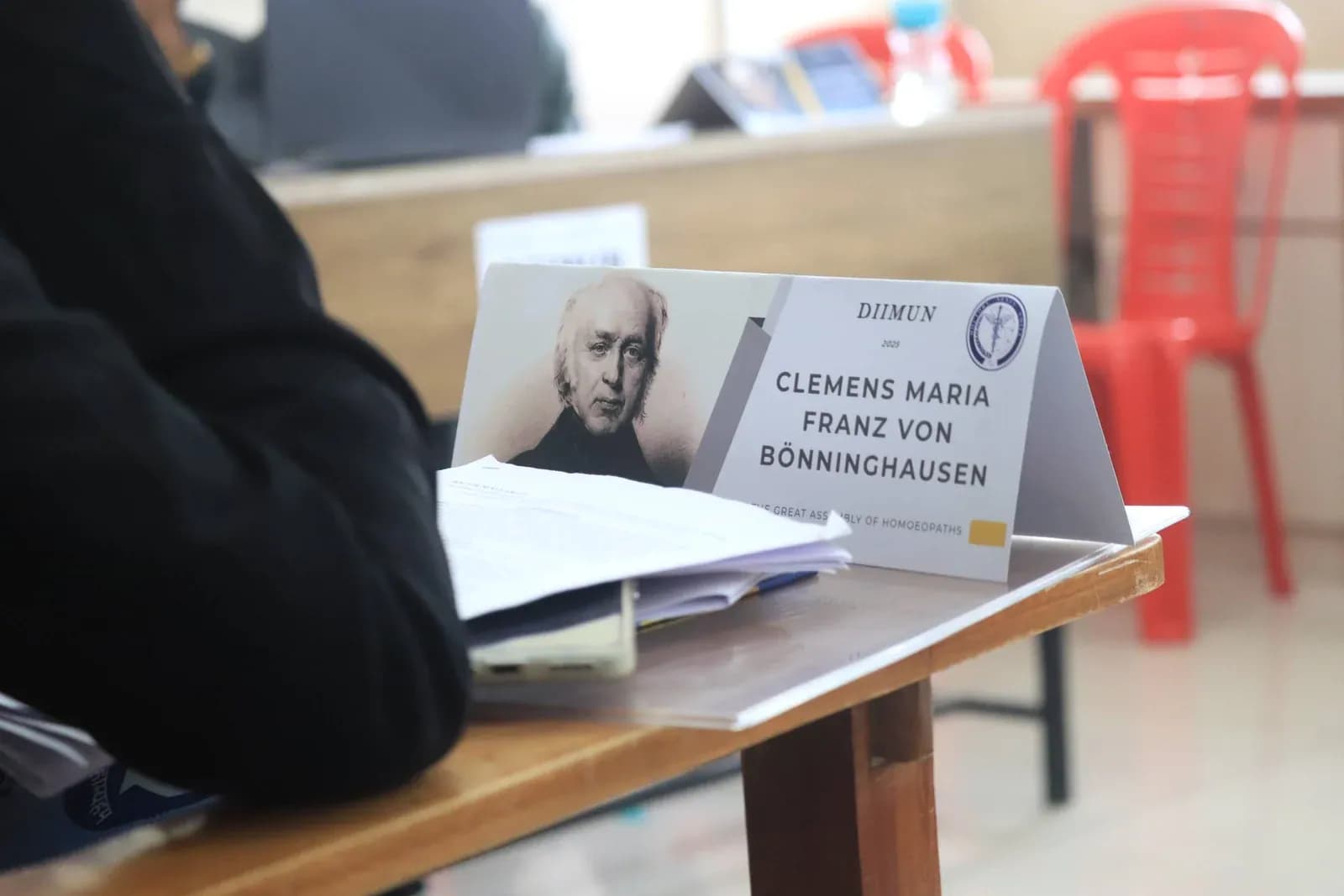
Baron Clemens von Bönninghausen
Doctrine of Analogy & Grand Generalization
Complete symptom schema (Location, Sensation, Modality, Concomitant), polarities, and Therapeutic Pocket Book (TPB).
Dr. James Tyler Kent
Hierarchical Miasmatic Synthesis & Primacy of Mentals
Mental generals (will, understanding, memory) first, physical generals second, and characteristic particulars last.
Dr. Herbert A. Roberts
Dynamism, Susceptibility & Vital Energy
Law of Similars as a natural law; precise assessment of vital susceptibility, physiological reactions, and miasms.
Dr. Stuart Close
Organon Hermeneutics & General Pathology
Psychological and biological interpretation of the Organon; totality of symptoms as outward expression of vital derangement.
Dr. Cyrus Maxwell Boger
Pathological Generals & Tissue Affinities
Pathological generals, anatomical affinities, and time modalities for rapid synoptic repertorisation (BBCR).
Dr. Richard Hughes
Pharmacodynamics & Pathological Similitude
Remedy selection grounded in physiological drug action and verified tissue pathology; Cyclopaedia of Drug Pathogenesy.
Dr. M.L. Dhawale
Standardized Case-Receiving & ICR Synthesis
Longitudinal evolutionary portrait of illness, structured susceptibility grid, and multi-axial case synthesis.
Dr. Prafull Vijaykar
Predictive Homoeopathy & Embryological Laws
Correlating Hering’s Law strictly with embryological germ layers (Ectoderm, Mesoderm, Endoderm); genetic constitutional prescribing.
Prof. George Vithoulkas
The Science of Homeopathy & Levels of Health
Stratifying human defense into 12 Levels of Health; evaluating acute fevers; laws of suppression and single-remedy purity.
Dr. Madan Lal Sehgal
Revolutionized Homoeopathy (ROH System)
Prescribing strictly on the patient’s present, predominating, and persisting mental disposition (PPP) extracted from colloquial speech.
Dr. Rajan Sankaran
Sensation Method & Kingdom Classification
Vital sensation beyond mind and body; mapping Mineral (structure), Plant (reactivity), and Animal (survival) kingdoms.
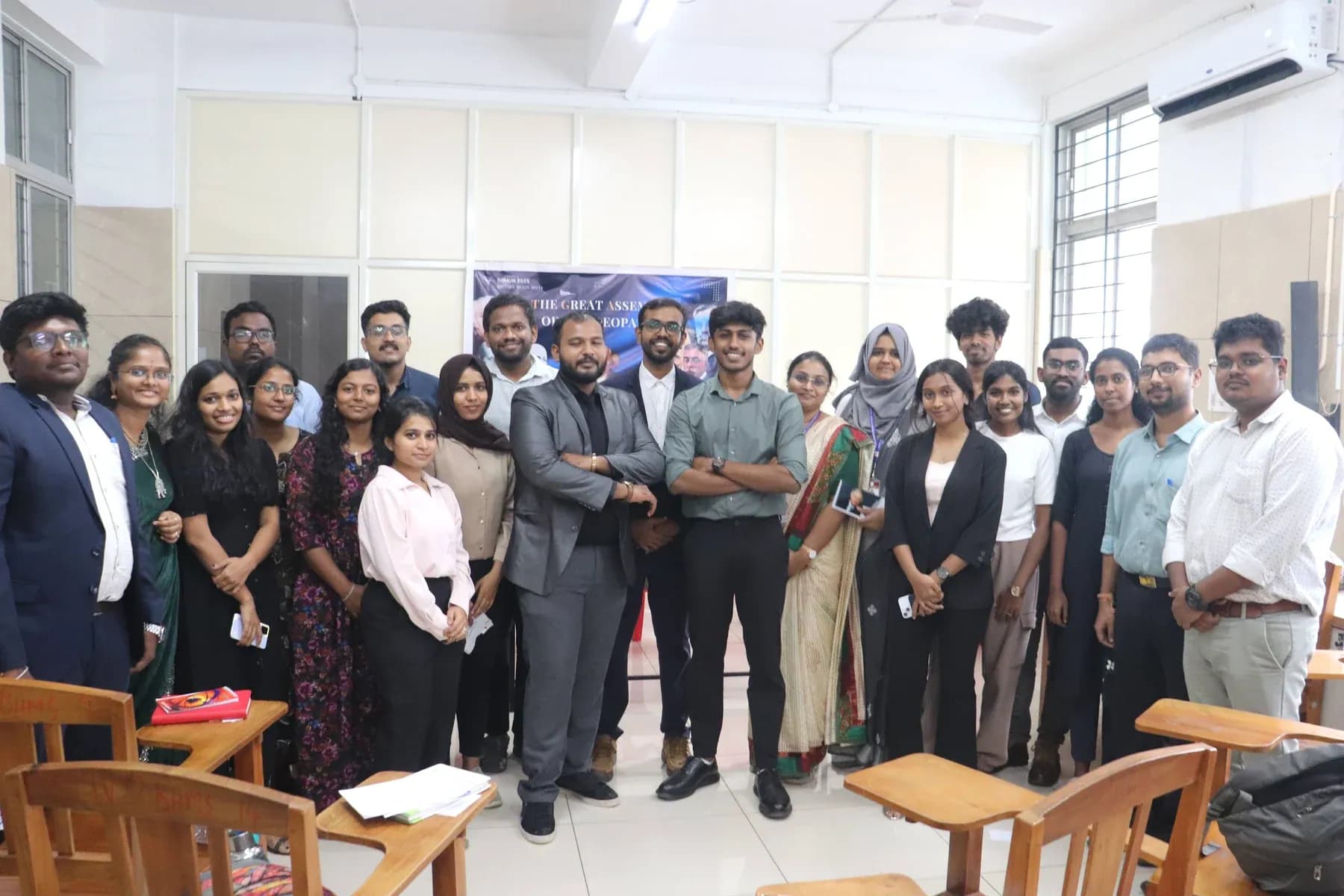
The DIIMUN Chapter 1 Delegation (2025)
Ready to Step onto the Assembly Floor?
Every delegation includes official physical kits, printed dossiers, conference badges, lunch and high tea on October 7, and free pre-conference training.